
CO₂ Laser Resurfacing
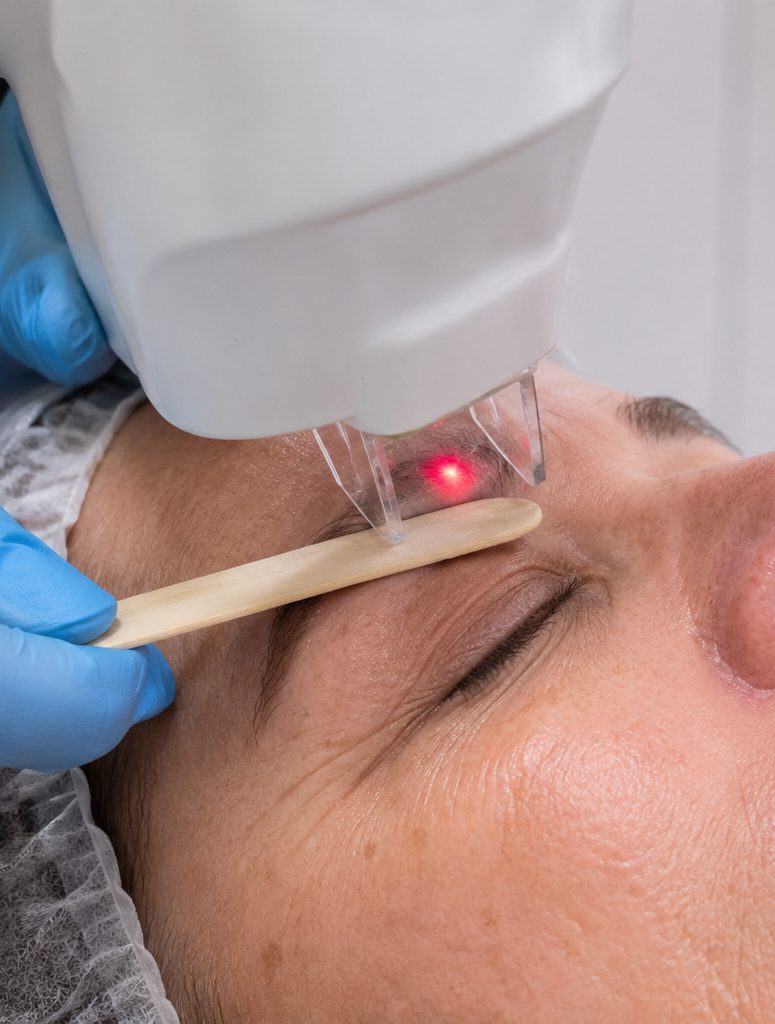
Fractional carbon dioxide (CO₂) laser resurfacing is a practitioner-delivered procedure that creates controlled columns of thermal injury in selected layers of the skin.
The surrounding untreated skin supports the healing response. Treatment depth and density can be adjusted according to the concern, treatment area, skin characteristics and planned recovery.
At Face and Body Adelaide, CO₂ laser treatment is consultation-led and individually planned.
It may be discussed for selected concerns involving skin texture, lines, sun-related change, enlarged pores or scarring.
Suitability, recovery and response vary, and no particular result can be guaranteed.
What is fractional CO₂ laser resurfacing?
A CO₂ laser emits energy that is absorbed by water in the skin. In fractional treatment, the energy is delivered in a pattern of microscopic columns rather than removing the entire surface uniformly. The chosen settings influence the depth, density and intensity of treatment, as well as recovery and risk.
As the treated skin heals, some people may notice changes in texture, surface irregularity or the appearance of selected lines and scars. The extent of change is variable. CO₂ laser cannot stop ageing, remove every scar or pigmentation concern, or reproduce the effect of surgery.
Concerns That May Be Assessed
- Fine lines and selected deeper lines
- Rough or uneven skin texture
- Selected acne scars and other suitable scars
- The appearance of enlarged pores
- Selected sun-related skin changes
- Crepey skin in carefully assessed areas
- Overall skin-quality concerns where resurfacing may be appropriate
Different concerns can look similar but require different treatment. For example, pigment may be epidermal, dermal, vascular or associated with melasma; acne scars may be rolling, boxcar, ice-pick or tethered. Assessment helps determine whether CO₂ laser is reasonable or whether another approach, referral or no treatment may be safer.
Mild, medium and deeper resurfacing
Milder resurfacing
A lower-intensity approach may be discussed for selected superficial texture or early skin-quality concerns. Recovery is often shorter than with more intensive treatment, but more than one session may be considered and change may be modest.
Medium resurfacing
Deeper resurfacing
Deeper or higher-density treatment creates a more significant injury and carries greater recovery demands and risk. It is not automatically more suitable or more effective for every concern. Conservative selection, preparation, aftercare and the practitioner’s scope of practice are particularly important.
Areas that can be assessed
- Full face or selected facial areas
- Around the mouth
- Cheeks and temples
- Forehead
- Carefully selected under-eye or eyelid skin
- Neck or décolletage in appropriately selected patients
- Individual scars or localised areas
Skin thickness, healing capacity and risk differ by area. The eyelids, neck and décolletage require particular caution. Treatment around the eyes requires appropriate eye protection. CO₂ laser is not equivalent to surgical blepharoplasty and cannot correct every cause of eyelid hooding, eye bags or skin laxity.
Your consultation at Face and Body Adelaide
Your consultation is used to understand the main concern and decide whether the expected benefit is proportionate to the recovery and risk. Your practitioner may assess:
- Skin type, pigment history and tendency to mark or scar
- The type, depth and location of lines or scars
- Active acne, infection, dermatitis, rosacea or other inflammation
- Melasma or a history of post-inflammatory hyperpigmentation
- Medical conditions, medicines and previous procedures
- Cold-sore history and whether medical advice is required
- Recent sun exposure, tanning and ability to follow aftercare
- Expectations, work or social commitments and tolerance for downtime
A test area, staged plan, alternative treatment or medical referral may be recommended. Consultation does not mean treatment will be suitable or performed.
What happens during treatment?
The treatment area is cleansed and prepared. Pain-management options are discussed according to the treatment depth, area, medical history and clinic protocol. Protective eyewear is required. The practitioner delivers the laser in a planned pattern using settings selected for the individual.
Heat, stinging or discomfort may occur during and after treatment despite pain-management measures. Appointment length varies with the area and intensity. Aftercare is applied or explained before you leave, and follow-up may be recommended.
Recovery and aftercare
Recovery varies with treatment depth and density, the area treated, skin characteristics and individual healing. Redness, warmth, swelling, sensitivity, pinpoint bleeding, oozing, crusting, bronzing, peeling and temporary darkening can occur. More intensive treatment generally involves longer and less predictable recovery.
Your practitioner will provide instructions about cleansing, moisturising or barrier care, sun protection and when to restart active skincare, makeup, exercise, swimming or other treatments. Do not pick or scrub healing skin. Protecting the treated area from ultraviolet exposure is important, particularly while redness or pigment change remains.
Seek prompt advice if you develop worsening pain, marked swelling, spreading redness, pus, blistering, fever, eye symptoms or another unexpected change. Contact the clinic or obtain urgent medical care when advised.
Risks and possible complications
CO₂ laser resurfacing has expected treatment effects and less common complications. Risk varies between people and increases with treatment intensity, certain areas and some medical or skin histories. Possible risks include:
- Pain, burning, tenderness, itching and prolonged sensitivity
- Swelling, redness, crusting, peeling and extended recovery
- Infection, including bacterial, viral or fungal infection
- Cold-sore reactivation in susceptible people
- Post-inflammatory hyperpigmentation or prolonged darkening
- Hypopigmentation or permanent loss of pigment
- Persistent redness, visible vessels or changes in texture
- Acne, milia or dermatitis flare
- Delayed healing, scarring or changes at treatment borders
- Eye injury if appropriate protection and technique are not used
- An unsatisfactory, uneven, subtle or temporary response
This list is not exhaustive. Your individual risks and the steps used to reduce them should be discussed before you consent.
Who may not be suitable?
Treatment may be delayed, modified or not recommended for people with active infection, open wounds, significant inflammation, recent tanning or sunburn, impaired healing, certain medicines or medical conditions, or an inability to follow aftercare. Pregnancy or breastfeeding, a history of abnormal scarring, pigment disorders, immune suppression, recent procedures and use of medicines that affect healing require individual assessment.
Melasma and darker skin types require careful evaluation because heat and inflammation may worsen pigmentation. Some people will be better suited to a different procedure or no cosmetic treatment.
How many treatments will I need?
Related concerns
You may find the following condition pages helpful. These links provide further information and do not mean CO₂ laser will be recommended.
Acne Scars & Scarring
Acne scars differ in shape, depth and tethering. Some scar patterns may require a combined or alternative approach.
Enlarged Pores & Uneven Skin Texture
Pore visibility and uneven texture have several possible contributors. CO₂ laser may be considered for selected concerns after assessment.
Wrinkles & Fine Lines
Lines can reflect movement, skin quality, sun exposure, volume change and laxity. Assessment helps determine whether resurfacing is proportionate.
Upper- and Under-Eye Concerns
Saggy eyelids and brow concerns and under-eye concerns have different causes. CO₂ laser may be considered for carefully selected crepey skin or mild laxity, but it is not surgical blepharoplasty and cannot correct every concern.
Body Skin Laxity & Crepey Skin
CO₂ laser may be considered for selected areas of mild laxity or crepey texture. Suitability depends on the body area, skin thickness, healing capacity and degree of laxity; treatment should not be presented as producing a surgical lift.
Why choose Face and Body Adelaide?
Face and Body Adelaide takes a personalised, conservative and consultation-led approach. Treatment intensity is selected according to the concern, skin characteristics, medical history, healing and tolerance for recovery—not simply the strongest setting available.
Your practitioner will discuss reasonable alternatives, limitations, expected recovery, material risks and costs. There is no obligation to proceed, and treatment may be declined or postponed when the risk is not considered proportionate.
Frequently Asked Questions
Is CO₂ laser resurfacing painful?
Heat, stinging and discomfort can occur. Pain-management options vary with the treatment plan, but they cannot guarantee a pain-free procedure. Your practitioner will explain what is available and medically appropriate.
How much downtime should I allow?
When will I see a change?
Can CO₂ laser treat acne scars?
Can CO₂ laser treat pigmentation?
Can CO₂ laser tighten eyelid or under-eye skin?
Can CO₂ laser be used on the neck or décolletage?
How much does treatment cost?
Book a CO₂ laser consultation in Adelaide
If you are considering CO₂ laser resurfacing for texture, lines, sun-related change or scarring, begin with an individual assessment at Face and Body Adelaide. Your consultation will cover suitability, alternatives, preparation, expected recovery, material risks, likely limitations and costs.
Treatment is not guaranteed to be recommended or performed. The aim is to help you make an informed decision based on your skin, priorities and tolerance for recovery.